
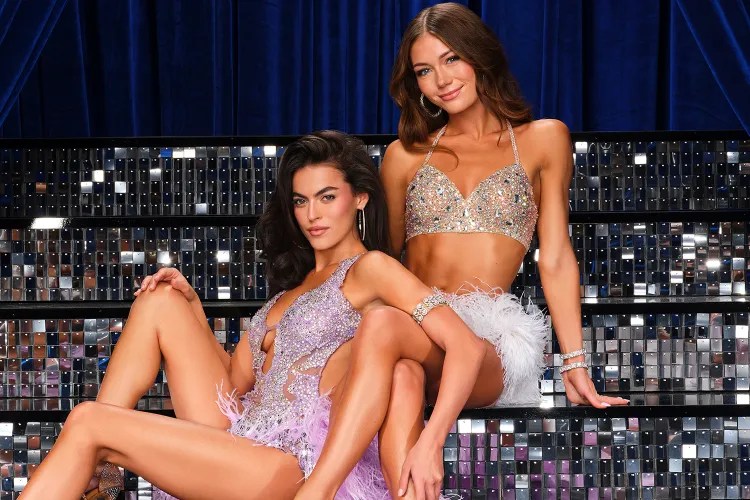
The U.S. version of DWTS has had same-sex female competitive pairings but not a comparable two-men competitive pairing.
It took Dancing with the Stars 30 seasons to have its first female pairing; the first pairing featured Jojo Siwa and Jenna Johnson. The second will be this upcoming season 35, when Sarah Jane Nader and Hailey Bills will compete together. But this raises the question: why hasn’t there been a male pairing?
The first same-sex pairing was back in 2010 on Dancing with the Stars: Israel with Gili Shem Tov and Dorit Milman. Fewer than ten same-sex pairings have occurred on the show globally since. With the rise of LGBTQ+ representation in TV and media, DWTS has the opportunity to showcase inclusion.
One Redditor, FabulousCat7823 on r/dancingwiththestars, said, “There is no way the show would have done a same sex pairing this year. The political and cultural climate is way too bad right now. Even if the show wanted to, I can’t imagine the hate and backlash that couple would get online.”
This comment was made one year ago, referencing 2022, when Gleb and Shangela made history as the first drag queen on the show. Even with the “political and cultural climate,” DWTS paired them anyway.
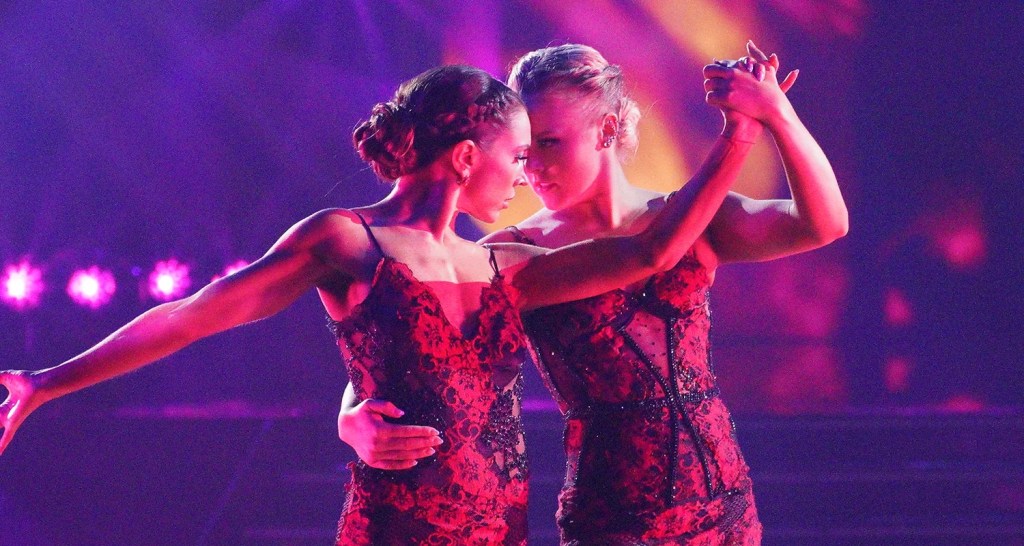
Two men were paired for the Season 33 finale: Derek Hough and Mark Ballas, who performed an Argentine Tango. Previous executive producer of DWTS, Ryan O’Dowd, told Deadline, “I would say we are constantly looking at the ways by which we can push the envelope and produce a show that reflects and represents society as a whole…so I wouldn’t rule it out. It’s something that we’re continuing to discuss.”
The traditional ballroom dance is structured around male and female roles. According to The Politic, Abby Lee writes that “unlike contemporary dance, ballroom relies heavily on tradition and history.” Lee adds that “Men lead. Women follow. This is the model that has been passed down for centuries through almost all forms of communication and media.” As traditional norms are being forgotten for women pairings on DWTS, fans want boys-on-boys pairings too.
Representation of queer voices seems to be missing from the competition show space. It would be inspiring to see two male dancers in a ballroom space dominated by traditional values. These heteronormative tendencies evolved from historical European court customs and social etiquette that mirrored traditional gender roles. With all that being said, the question at hand is: why has DWTS been willing to feature women in same-sex competitive pairings, but not two men?




 Popline News