Additional reporting by Audrey deMurias

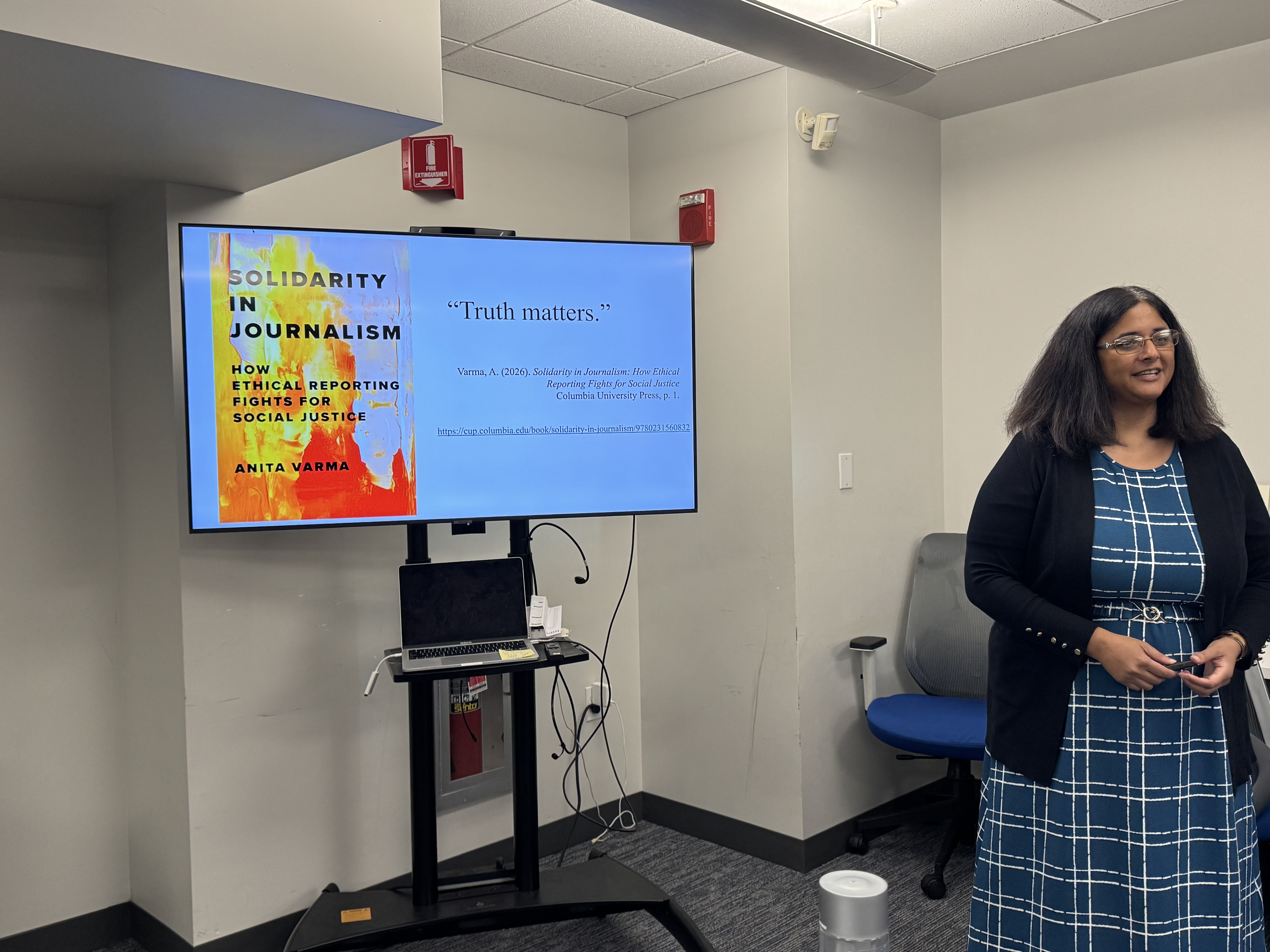
On Monday, Oct. 5, Dr. Anita Varma, an assistant professor in the School of Journalism and Media at UT Austin and leader of the Solidarity Journalism Initiative at the Center for Media Engagement, spoke with Emerson College journalism students about her new book, Solidarity in Journalism: How Ethical Reporting Fights for Social Justice.
Varma, whose work focuses on media ethics, discussed how solidarity journalism can shape coverage of social issues and encourage reporters to center the experiences of those most affected. In her book, Varma defines solidarity in part as “a commitment to social justice that translates to action.”
She opened her presentation with the phrase “truth matters.” Varma argued that journalists can get closer to that truth by prioritizing people directly affected by an issue rather than those she calls “podium people,” such as politicians, officials, and other authority figures. She said frequently amplifying officials can backfire because journalists may receive “official information and official misinformation.”

Homelessness was one example Varma repeatedly returned to, arguing that coverage often gives more weight to authority figures than to people experiencing homelessness themselves. A solidarity journalism approach instead gives those directly affected more space to describe their own circumstances. “People who know the most are often heard from the least,” she said.
One motivation behind the book, Varma said, came from observing dehumanizing language surrounding the Syrian refugee crisis. She initially wondered whether that distancing was partly because the crisis felt far away. But after seeing similar language used to describe homelessness in San Francisco, an issue unfolding much closer to home, she became increasingly interested in how journalism can dehumanize people experiencing hardship.
“Dehumanization in journalism keeps me up at night,” Varma said.

Reporting in solidarity can also put journalists in difficult positions. “I’ve faced many attacks for the work that I do,” Varma said. She described solidarity reporting as both “celebrated” and “censured,” noting that award-winning work can also put journalists’ careers at risk.
During the talk, Varma outlined several ways journalists can practice solidarity reporting, from deciding who is considered newsworthy to choosing sources, interview questions, and quotes. She emphasized the importance of returning to communities and questioning official data.
Varma also challenged the idea that journalism can ever be entirely detached from values. Journalists choose which stories to magnify, which voices to include, and how issues are framed, she said. She argued that acknowledging those judgments is part of practicing journalism ethically rather than pretending they don’t exist.
“The right time for solidarity in journalism is always right now,” Varma said.