
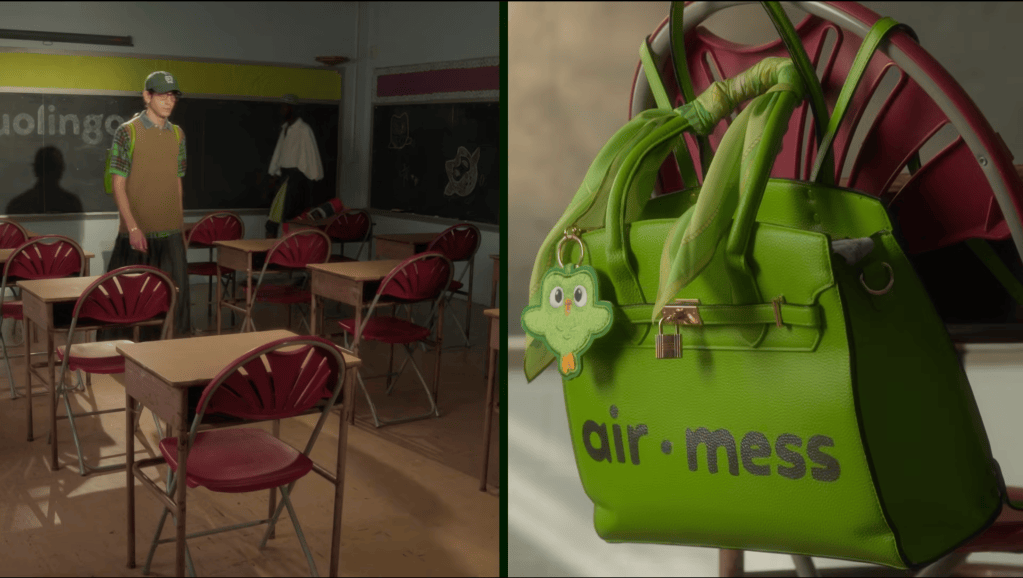
Among the sophisticated silhouettes debuted at New York Fashion Week, you may or may not have seen an infamous shade of green and an owl we know all too well.
Duolingo, one of the most popular language-learning platforms, debuted its own kind of collection at NYFW. The Phonetic Collection featured a line of preppy pieces designed by Megan O’Cain, designer and “Next in Fashion” alum, all with the phonetic spellings of luxury brand names. Think a sweater vest with “Moh.Skee.Noh.” across it or a lime green faux Birkin displaying “air ᐧ mess.”
While other brands debuted collections on the runway, Duolingo held a two-day pop-up where visitors could bid on pieces from the capsule collection. The catch? You couldn’t bid with actual money. And in fact, people who wanted to bid had to use their Duolingo streak as currency. The higher the streak, the higher the bid.
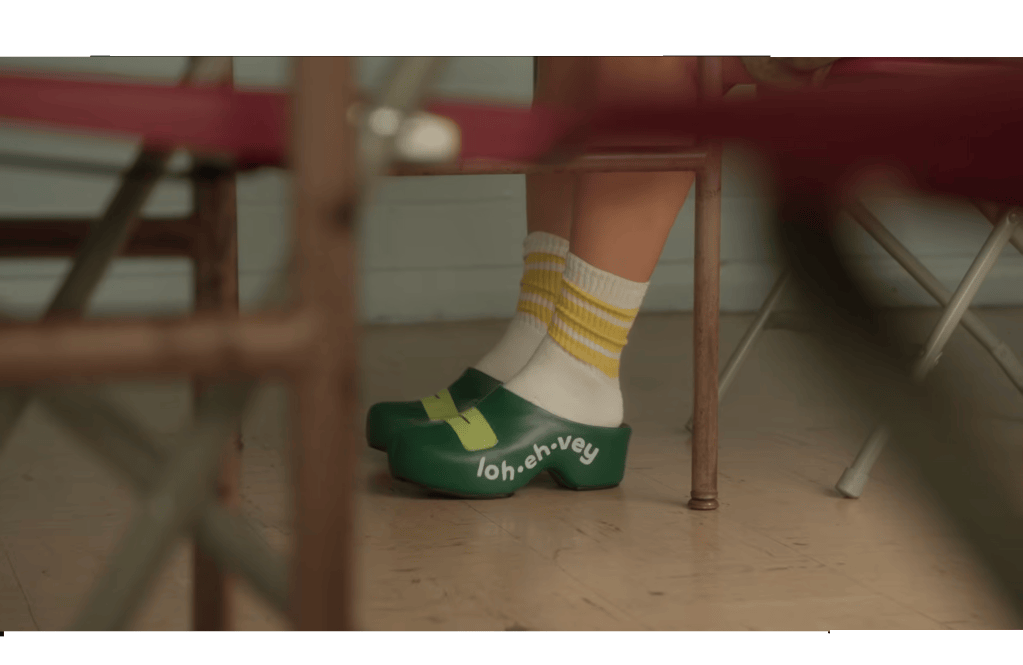
Now, would I necessarily want to take home a pair of forest green clogs with “loh.eh.vey.” on them? Absolutely not, and at first (and even second) glance, the collection may look tacky and out of place at NYFW. However, the event seems less about fashion and more about what Duolingo does best—teaching language.
According to Duolingo, the collection was designed to “transform recognizable fashion silhouettes and iconic design houses by featuring phonetic spellings of the designers’ names, exaggerated proportions, and a distinctly Duolingo sense of humor.” But why would fashion need a lesson in language?
The campaign comes from research by Duolingo and YouGov, which found a gap between how confidently people say fashion names and whether they pronounce them correctly. According to the study, 62% of respondents said they could confidently pronounce Hermès, but only 15% did so correctly.
So what seemed like a tacky attempt at a fashion statement at NYFW is actually a clever marketing campaign rooted in something Duolingo knows better than most: making language learning memorable. By turning notoriously mispronounced designer names into wearable, head-scratcher designs, Duolingo found a way to make language and pronunciation part of the conversation rather than another vocab lesson users might quickly forget.
Whether anyone actually wants to wear a pair of “loh.eh.vey.” clogs, the collection accomplished what it set out to do: it got people talking and, perhaps more importantly, saying fashion names correctly.




 Popline News