
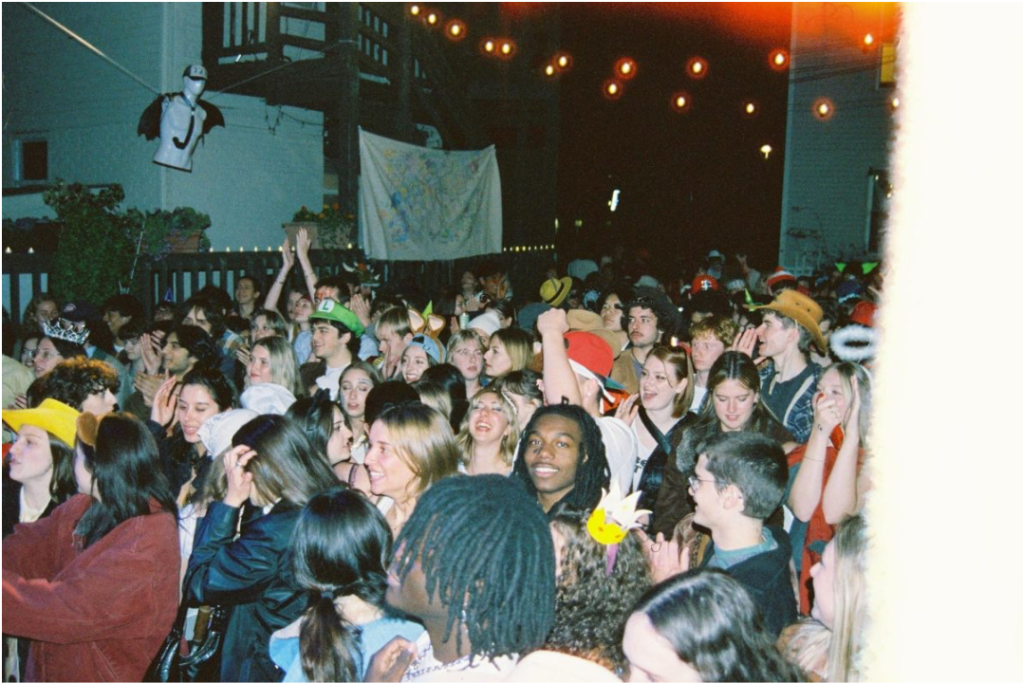
Junkyard, a local Boston Musical Festival, Photo Credit: Quinlan Harp
Music has never been so universal and so easily accessible. With the rise of streaming services, YouTube, and continued disappearance of physical musical media, it has never been as easy to listen to whatever you want whenever you want. With this rise of new mediums within music, seeing music live on both a local and global level has become increasingly out of reach for most people, as Emerson College WACB radio host Heather Thorn states, “Jimi Hendrix was right when he said that music is the universal language. Art is not a luxury or at least it shouldn’t be.”
Boston has always been a city that has been a home to the arts, especially local music. From mainstays and iconic venues like Fenway Park and TD Garden to the long-lost local music clubs of yesteryear, such as Great Scott and Toad Boston, it used to be a goldmine for the local music scene, but in recent years, gentrification has transformed the city.
With ever-rising prices, displacements of many local residents, and the changes of neighborhood characteristics, Boston has pushed out much of the culture and character that used to define the city. A prime example is the closure of “Great Scott,” an Allston club that had been open for over 40 years, but shut its doors permanently during the COVID-19 pandemic.
Unfortunately, closures during COVID is a major trend with clubs closing and rising prices in cities all over America. One person who had firsthand experience with running a local music club during COVID and dealing with the fallout is Rich Lupo, owner and manager of The Met in Providence, Rhode Island.
“We’ve been doing ok since COVID.” Lupo says when talking about his running his club as he continues on, “We’ve gone from about 5 nights a week to 3 being open. There’s more non-band events that you have to do. We’ve been fortunate enough to have some dance nights, and those really save our business and things like that are really important now to local places to keep the club going.”
Despite finding alternative ways of bringing newcomers and regulars into the club, Lupo is still all top aware of the stresses of running a club in the modern day, “Dealing with the pressures of opening a business was much, much easier back in the day. We were very fortunate there were many places to play when my first club opened. It’s definitely much, much harder now.”
When asked about how recent gentrifications have affected the club,there are many issues, as Lupo goes on to explain, “My clubs have been very much the victims of gentrification. I sold Lupo’s 8 years ago, and it was already in its third location due to gentrification. People were building apartments, and that forced us to relocate and move.”
A major trend with gentrification seems to be that of a music venue finding a vacancy, and then that specific area within a city is turned into housing, as Lupo goes on to state, “My basic complaint of my experience is that a club will open in this warehouse and the better you do the more quickly you’re dismissed. The area immediately always gets more attractive, so then the landlord always seems to find a loophole in your lease and the local politicians get enticed to move you because there’s nothing they like more than to gentrify and build new residences in their town.”
Aside from the struggles that running a club itself presents, however, the real loss in Lupo’s eyes pertains to both the experience and experiences bands lose out on when there are no local places to play: “I just feel bad for these new young bands.” Lupo says.
He continues, “They won’t have the skills to perform if they don’t have a place to play, and they’ll miss out on the magic, on the sense of wonder that playing in a local and small place gives a new group.”
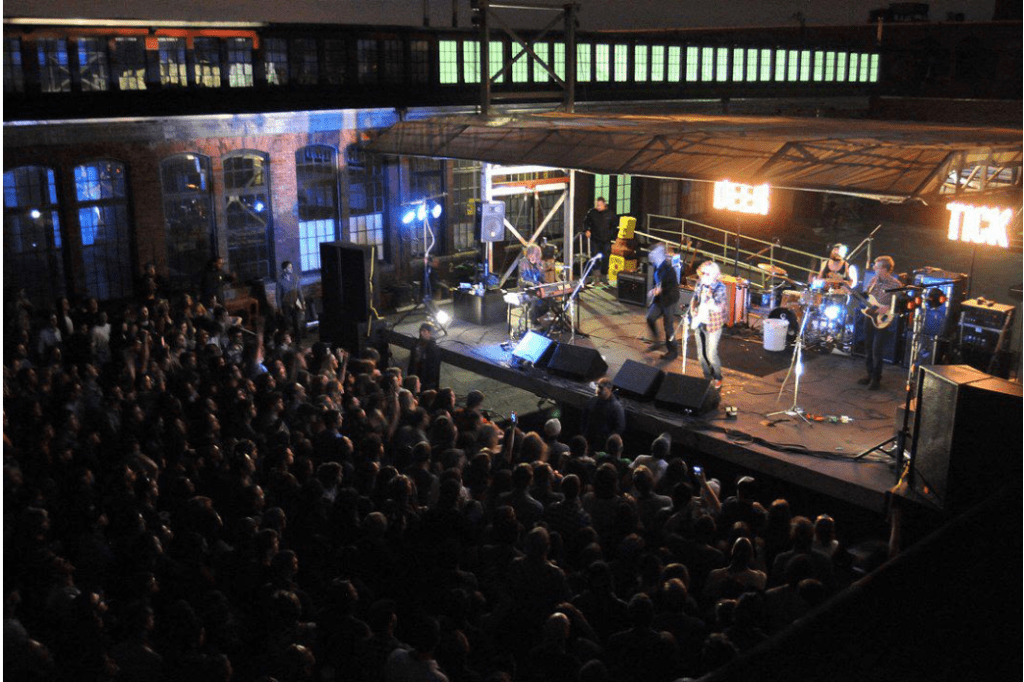
The Met Rhode Island, Photo Credit: https://www.visitrhodeisland.com/listing/the-met/7935/
The local musicians are just as vital to keep a local scene alive as the venues they play at, and gentrification affects them both. While the way in which bands both promote themselves and find places to play, Lupo still believes that local venues are essential to truly experiencing music, “I still think there is a very strong community for local bands. I don’t think any of them make any more, but there’s a lot of them and they’re all still just trying to keep the music alive.”
With gentrification becoming a rising trend in cities, it is not only important to look at how it affects local business owners within the music industry, but also the fans and concertgoers themselves.
Another individual who has firsthand experience attending local live shows and spotlighting local artists is Heather Thorn. Thorn has a radio show called “Stop Rock and Roll” on Sundays at 10 am through Emerson’s WACB network.
Through her show, she spotlights both new and old, local and famous artists who are either some of her favorites, have impacted her, or just to shine more light on their work, as Thorn states, “I’m able to share all things rock and roll and spotlight all different places and scenes that got me into rock and roll. I love live music and going to local shows. I just love the atmosphere that is created there and meeting up with other fans!”
Through her experience of going to college and living in Boston for a few years now, Thorn has expressed frustration and just a general sadness over how hard it can be to find local shows or even get tickets to see more noteworthy acts.
“It’s been so hard to find local places to see people play.” Thorn says, “Ticketmaster has obviously become a monopoly, and it’s just been so hard to both find local acts to see and the already famous acts that I love. Just tickets and live shows are becoming so hard to see, it’s definitely become more of a privilege to see a live show.”
The frustration of gentrification is palpable within the local community of Boston, especially when it pertains to the closure of music venues. According to Myles McCaul, writing for GBH, over a dozen local clubs in Boston have closed due to gentrification.
This has left the local musical community in Boston dazed and discombobulated and forced all the local musical communities, such as the Roxbury, Dorchester, and Jamaica Plain scenes, to either relocate or completely disappear due to rising costs and the closing of essential local venues.
There is hope, however, as members of many college communities in Boston, namely Emerson and Berkley, have found new spaces to organize and create new scenes.
Particularly Junkyard Music Festival in Cambridge has become a beacon of hope for many local musicians. The local grassroots musical event that is mainly organized by Emerson and Northeastern Students and Alumni started on Sept. 30, 2023, and will host its next event on Dec. 12, 2025.
Speaking on her experience attending the event, Thorn carries a hope for the future of local music, “I love going to smaller performances like Junkyard and seeing some of the bands that play there, although it is mostly Emerson College kids there, but it’s so nice to just have that outside community for musicians.”
Junkyard also provides a unique platform for local musicians to showcase themselves to people of a similar age, as Junkyard has become ubiquitous with many college communities. Thorn continues, “Last year I went to see a band Jamwitch in Jamaica Plain after seeing them at Junkyard! It was amazing to be so close to them playing the music!
Despite the hope that Junkyard and other similar local music festivals and venues bring, it is still undeniable tough to find places to see local bands play as Thorn goes on, “It’s just a shame that we have to go that far to find local shows, as downtown Boston has just become too expensive for local venues to survive.”
The thirst and desire for local music continues to thrive, however, as proven by the continuing rise in attendance and demand at both The Met and Junkyard. Gentrification is still an uphill battle, however, as rising rent prices in Boston and many other artistic hub cities such as Providence and New York City show no sign of stopping any time soon.
With the future of local live music still very up in the air for the foreseeable future, Rich Lupo still remains hopeful“I still think there is a very strong community for local bands. There’s a lot of them, and they’re all still just trying to keep the music alive.”
The audience still holds strong as well for their demand of live, local, and affordable music, as Heather Thorn puts it perfectly, “Music has just had a massive significance to me and my life, and it’s incredible how artists can bring so much out of and to their listeners and I believe that there is nothing more important than a live show. They should be accessible.”


 Popline News