
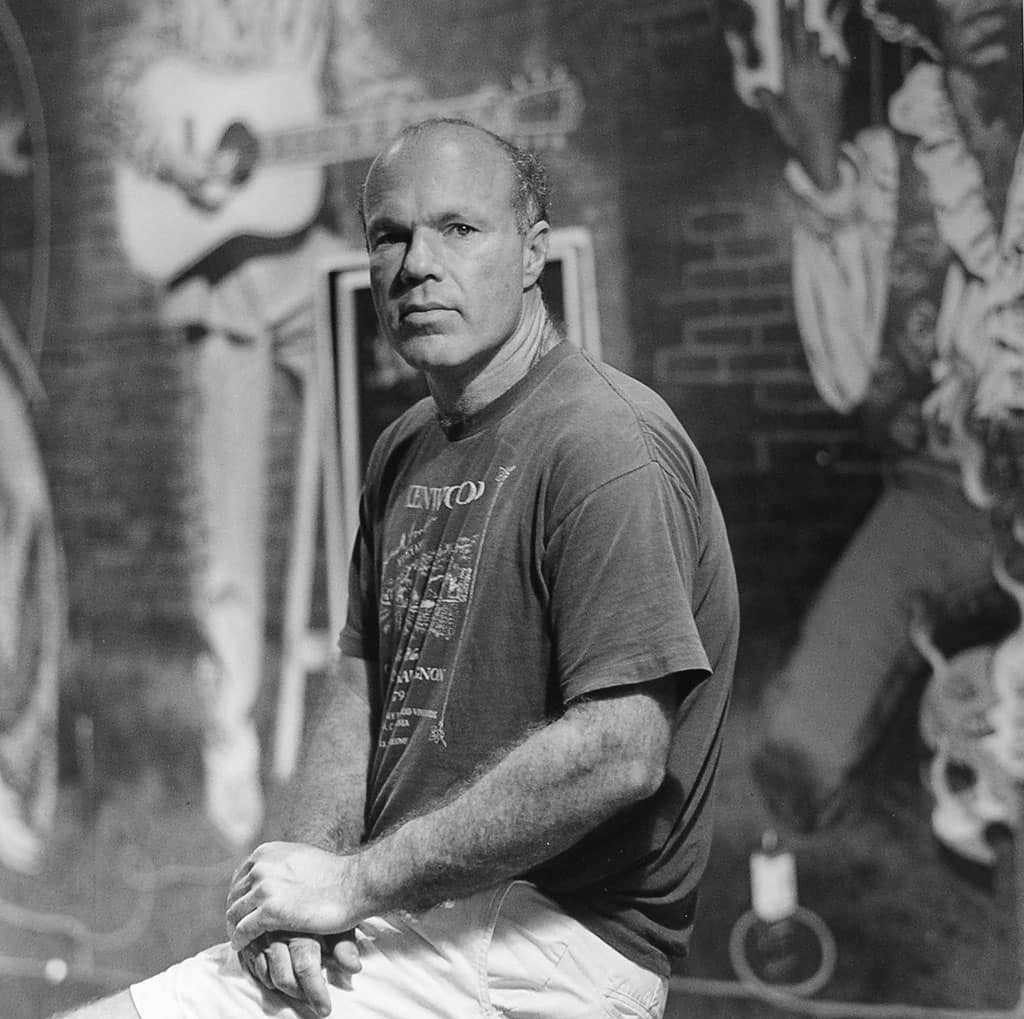
Photo Credit: Dana Neugent
You don’t stay working in the Rock and Roll bar business for long if you don’t have a laissez-faire attitude towards life. “We have a feral dog that grew up in Costa Rica, he didn’t know how to get in through the door at first, but we love having him,” said Rich Lupo, the 50-year-long owner of two of Providence, Rhode Island’s most influential and local Rock and Roll clubs.
This carefree, but immensely welcoming disposition bleeds into all aspects of his life, as he has welcomed some of what, at the time, seemed the most rugged acts into his clubs, The Met and Lupo’s, before they eventually went on to achieve superstar status. A few notable names that have played at these places over the years are James Brown, Stevie Ray Vaughan, Bo Diddley, the Ramones, Roy Orbison, Talking Heads, the Pretenders, Kendrick Lamar, Foo Fighters, Radiohead, and The White Stripes.
Video Credit: Nero Lives YouTube Channel
Music has always been a presence in Lupo’s life. A true Bostonian, Lupo grew up in Dorchester and would spend his Saturdays watching his father, who was a singer, perform in bars.
“I grew up listening to my father practicing. My mother would be playing the piano,” Lupo said. “They were playing more adult songs… not rock and roll.” It is this divergence in music taste and the classic spark of youthful rebellion that truly ignited his love for music.
At the time, Lupo was a student at Brown University. Despite his studies at the prestigious university that beckoned the future of a careered professional, something still nagged at Lupo.
“I graduated and didn’t know what to do with myself. I got my degree and got a few jobs and then soon quit them all,” Lupo recalled.
It was, in fact, a singular memory from his time as a student that went on to define the rest of his life. “The truth is, the first time I walked into a bar, I said it would be a blast to get musicians to play here,” he said. “I couldn’t get the idea of opening a club outta my head.” Soon after, Lupo set out to fulfill his dream.
Like every dream, it was easier said than done. While most may have been unsure of where to start, Lupo went back to his roots. He considers Providence to be his true home, not just because of his college years there, but because that’s where he found his first true talents to display.
One of the first jobs he had in the city was at a clothing import store, as he goes on to describe, “I hung around with this crowd that was at an Indian clothing importer, and it was all the hipsters, it was kind of a laid back place, and within that one job climate there were many musicians.” Most of these men were friends who shared his mutual love and style of the California Rock sound with the classic cool of the West Coast rock look.
Eventually, in 1975, Lupo scraped together enough cash to open his first clubs, Lupo’s Heartbreak Hotel and The Met. Two ‘individual’ clubs that shared a wall and had a walkway that blended the two together. It was within these sticky floors, beer-stained table tops, and poster-adorned walls that the first five acts were booked. At first, the space drew local musicians who aligned with the traditional rock sound of the time, but that was about to change.
“We did a lot of blues stuff, but the Ramones played in ’77 and that’s when the Punk rockers came to town,” Lupo said. Despite it not being the sound Lupo was well acquainted with, Lupo and his ragtag team at The Met were some of the first to welcome the Punk Rock movement to Providence.
Video Credit: David Ramone YouTube Channel
“It was a scene that was about to happen, and it was just fortunate timing. You had no idea it was going to blossom into such a major force. It was just this small thing that we did,” Lupo said as he recalled the catalyst of the first youth movement to grace his club.
While many bigger clubs would be wary of a return on their investment when it comes to buying into ‘youth movements’ and other owners wouldn’t want strange-sounding and even stranger-looking bands taking the mic up at their place, Lupo couldn’t have a more different attitude. “I was the guy running the bar, but I really just love music.” Lupo said, “I loved music that made sense for someone my age to love, but I really loved to see these new bands coming in and seeing these scenes form.” Not only setting the precedent for an open and welcoming policy to all new acts, but promising a chance to any new artist brave enough to take it from a man all too eager to hear them out.
The rockin’ good times, unfortunately, couldn’t last forever for both Lupo and his clubs. Much like the struggles local clubs still face today, both financial and governmental issues are unfortunately all too common within the clubbing scene.
“I feel bad for musicians because you don’t make money on either side of the ledger, at least in this area. The club’s not making any money and the band’s not making any money, but everybody understands that they’re just doing this thing.” Lupo said. Despite these constraints, however, Lupo’s faith in his love for music and creating an encouraging environment for new musicians has never wavered.
Lupo’s life, along with his club’s, has been tied to one another in perpetuity since he opened his very first establishment. In keeping with his norm upbeat outlook towards life, he seems to reminisce about his club’s hard times with a what will happen will happen attitude, “When negative things happen to me every certain number of years, my club would get closed. The politicians really care about city development over rock and roll clubs, and every 10 years something would happen.”
The weight of various closures and reopenings has, however, taken its toll on him over the years as he describes, “I really loved the first Lupos, I really loved the second Lupos, the third Lupos I thought was just a concert venue because of the politics of Providence. I regret that I couldn’t control the existence of my establishment.”
In spite of so many setbacks, Lupo credits his ever-fervent and spirited love for music as what has gotten him through it all, “To me, there’s just a love of music that you can always feel. You know when you go to a regular club and you’re a part of the business system, but we’re a real rock and roll club. It’s really about the music.”
His wicked sense of humor, however, still shines through and even has during his club’s darkest moments as he went on to recall with a laugh, “One time I was so terrorized by the police department because we were just these hippies in the middle of the city so…. I booked the band The Police at my club!” Brushing it off, he continued, “Eh, but I canceled it because I didn’t want to upset the police or put anyone in danger.”
Through all the strife and struggle, Rich Lupo is still going strong and remains at the helm of his current club, The Met. Still driven by his ardent love for music and still holding out his always open arms to new acts, “I’m deep into my 70s and I hang with people who are in their 20s and it’s really good for me because we connect through this music thing.”
Nowadays, however, local music scenes are disappearing faster than ever. According to NPR, due to COVID-19 and ever-encroaching gentrification, nearly 90% of local clubs have been forced to close permanently. Like all his past struggles, however, Lupo is determined as ever to keep the music alive. “I don’t know what exactly is closing them, but it provides an essential place for people to come and hang out. We just got bigger over the years, but that’s what it’s all about.”
It is during local music’s darkest time that people like Rich Lupo are a necessity for keeping the power of live music alive. Despite his age, Lupo has no plans of stopping, “I’m getting a little long in the coof and I don’t know how much longer I can keep doing it, but I love it!” When he does eventually plan to retire, he hopes that he can find someone to carry on the message of hope to new bands and someone who shares his never-dying love for the freedom of creativity and youthful effervescence of music.
Continuing to fight the good fight for local entertainment, Lupo still stares down these obstacles with his tried and true determination for local musical opportunities and meets them head on, as he puts it best in his own words, “Its been 50 years for me, I think it works and I don’t think clubs are going to die because there’s something so special about a live show. It’s special enough to never die.”


 Popline News