
In the digital age, the line between celebrity and influencer grows increasingly blurred. Social media stars are signing on to major television shows, teenagers who were dancing in their bedrooms during the Covid-19 pandemic are winning the Mirrorball Trophy on Dancing with the Stars, and people who were singing in their bathrooms for a few hundred viewers are now performing on some of the biggest stages in the world.
Take, for instance, this year’s MTV Video Music Awards on Sept. 7. The show featured a wide range of acts, spanning from bona fide music icons to up-and-coming artists; all sharing the stage for a night of music and celebration.
Mariah Carey accepted her Video Vanguard Award and performed a medley of hits, including ‘Obsessed,’ ‘Heartbreaker,’ and her 2005 smash hit ‘We Belong Together.’
Fellow artists Doja Cat, Sabrina Carpenter, and Post Malone also took the stage, rocking the UBS Arena for nearly three hours. LL COOL J hosted the evening’s festivities, and Ricky Martin and Busta Rhymes reminded viewers across the nation why their music is timeless.
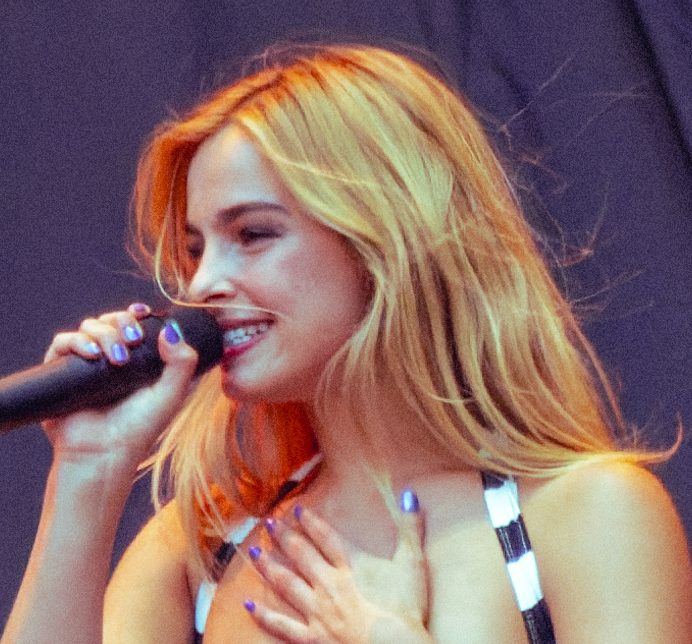
But as everyone accepted their awards, one new artist was notably absent from the arena. 24-year-old Addison Rae, nominated for Song of the Summer, opted to skip the show.
Many fans online believe she was snubbed out of a nomination for Artist of the Year. One fan wrote on X, “Yes, Addison did start her career on TikTok. And so did Alex Warren, who just got three nominations for this year’s #VMAs. Y’all just love to hate on women.”
Rae, herself, told Teen Vogue in August: “It definitely is funny whenever you feel like you put in a lot of work into something and it doesn’t get recognized by some place that you feel like you were contributing to.”
She released her debut album “Addison” back in June, but her rise to music fame began over a year prior, when her song “Diet Pepsi” went viral on TikTok.
Her musical success on the social media app was unexpected, but not entirely out of the realm of possibility, given that she originally gained fame as a dancer-turned-influencer in early 2020 as a member of the popular TikTok group, the Hype House.
She’s since made a name for herself in the music industry, performing alongside Charli XCX and Troye Sivan at Madison Square Garden during the Rush tour last year. And just this past summer, Broadway star Ben Platt performed an emotional rendition of “Diet Pepsi” at the Las Culturistas Culture Awards. The video went viral online, garnering over four million views on Instagram since it was published.
As Rae’s admiration among social media users continues to grow, her acceptance as a respected artist in Hollywood remains stagnant. The dichotomy between her popularity with Gen Z and among critics of the music industry begs the question: Can someone who started as an influencer ever truly become a celebrity?
The influencer-to-celebrity pipeline isn’t a new phenomenon. In the early to mid-2010s, YouTubers were the original “influencers,” using their platforms to earn millions of dollars through online content – something that had never been done before.
When some of these influencers tried to acclimate themselves into celebrity culture, they were staunchly rejected. Take, for instance, James Charles’ short-lived stint on the Met Gala red carpet. People online dragged his see-through metallic outfit and questioned why he was in attendance. One user on X responded to a photo of Charles on the red carpet, writing, “they really letting anyone in, huh?”
Even still, YouTube provided itself with a level of exclusivity that dissipated with the introduction of TikTok. A YouTuber needed a camera, a tripod, and editing skills. TikTokers just need an iPhone and a dream.
At the beginning of the Covid-19 pandemic, TikTok downloads surged from 192 million at the end of 2019 to over 313 million at the beginning of 2020. The platform became a new form of entertainment and community-building for people of all ages, and it produced countless stars, many of whom faded into anonymity as quickly as they shot to fame.
Addison Rae was not one of those individuals – beginning her career as a bright-eyed dancer whose bubbly personality and fluid dance moves quickly gained her millions of fans.
But as other content creators remained “influencers,” Addison broke through the mold, becoming one of the most popular music artists among Gen Z today.
In the days before social media, talent in Hollywood was scouted by producers. Artists were controlled by teams of marketing professionals, who intentionally crafted their ‘brands’ and personas in a way that would make them popular with the public.
A quick glance at today’s music scene reveals that Gen Z is now at the helm of the music industry’s future. Benson Boone, who was nominated for Best New Artist at this year’s Grammy Awards, started his career as an American Idol contestant. He voluntarily withdrew from the competition, wanting to separate himself from the label of the “American Idol guy,” and instead focused his sights on social media.
On Instagram and TikTok, Boone found that he could engage with fans much more directly and wound up gaining millions of supporters. Four years later, his song “Beautiful Things” reached number two on the Billboard Hot 100 and spent 84 weeks on the charts.
Another performer at this year’s VMAs was Alex Warren, a former member of the Hype House who made TikTok content alongside Rae. In a similar fashion, he was nominated for a VMA this year and won the award for Best New Artist. He also performed his song “Ordinary” on stage.
Between Addison Rae, Benson Boone, and Alex Warren, it is clear that the members of the music industry are becoming more accepting of influencers and content creators among their ranks. But whether or not the critics are ready to accept this change has yet to be seen.


 Popline News